Danske Bank · 2025
FX Trading
Automation
Designing automated liquidity management for business customers — enabling configurable rules for currency top-ups, sweeps, and swaps, eliminating constant manual intervention.
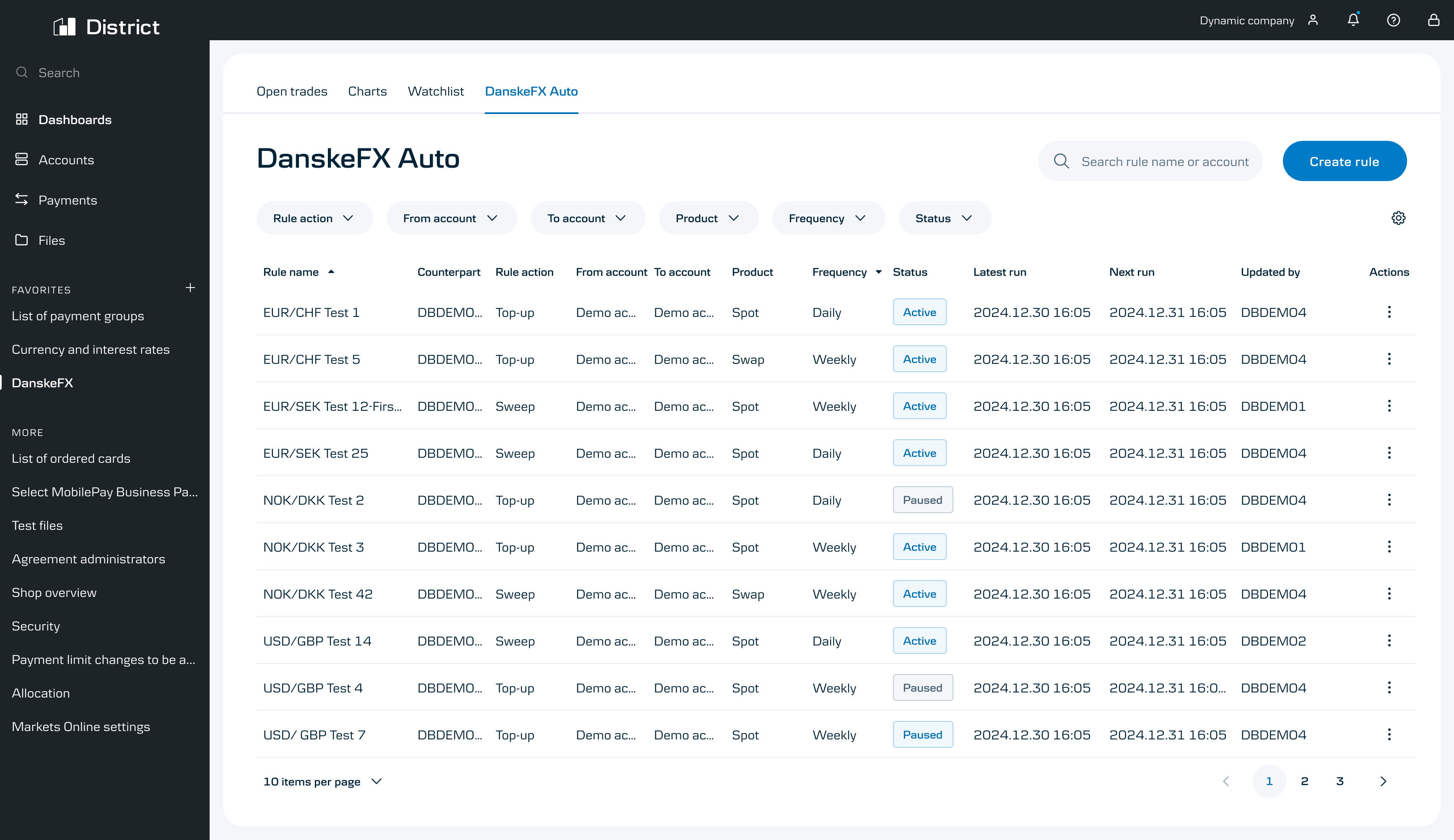
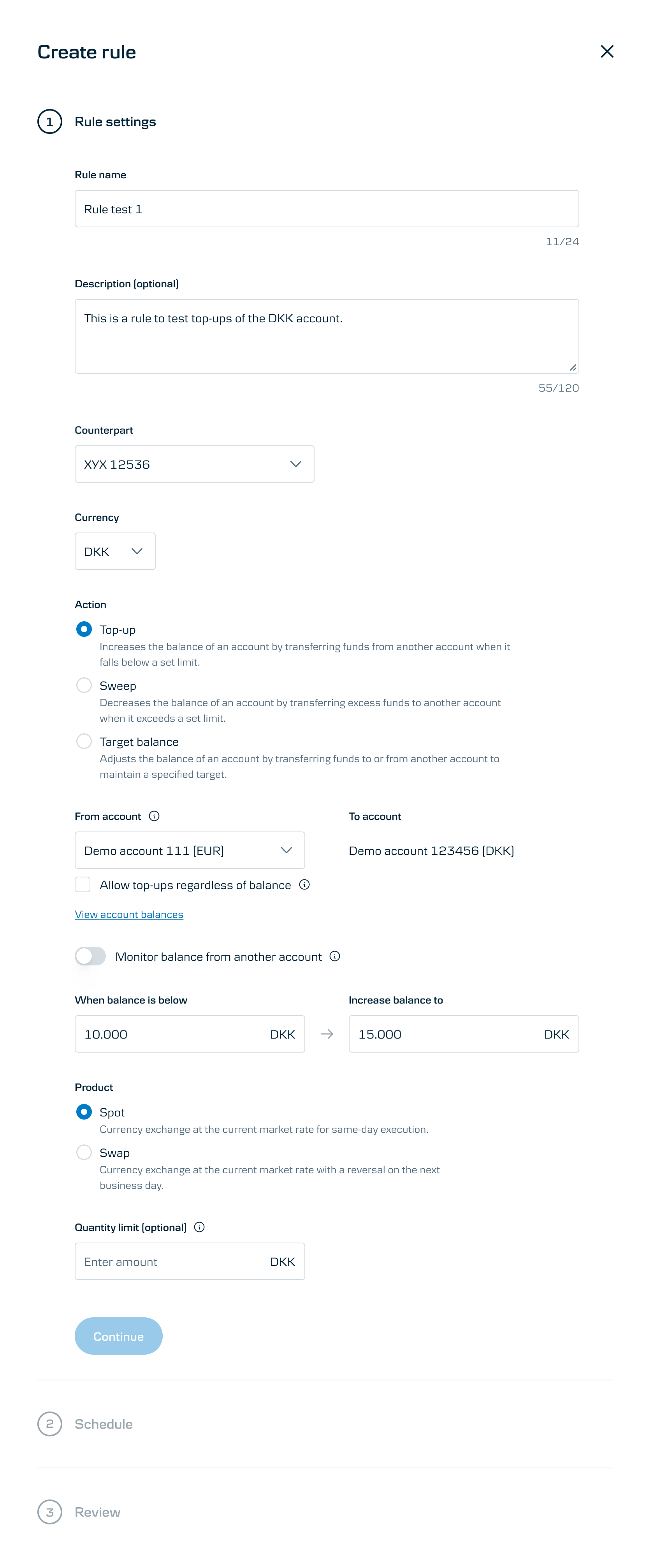
Designing automated liquidity management for business customers — enabling configurable rules for currency top-ups, sweeps, and swaps, eliminating constant manual intervention.
Business customers managing multiple currency accounts at Danske Bank faced a heavy operational burden. Without automated tools, treasurers and finance teams had to manually monitor and move funds between accounts to maintain their desired liquidity levels.
This created two costly outcomes: cash sitting idle in accounts without generating interest, and accounts occasionally tipping negative — triggering bank charges. The mental overhead of continuous monitoring was significant, particularly for businesses operating across multiple currencies.
The problem surfaced through sales feedback, direct customer research, and competitive analysis — with several competitors beginning to introduce automated liquidity tools, signalling clear market expectations forming.
The user base varied significantly depending on company size — from dedicated treasury professionals in large organisations to business owners managing everything themselves. This range of financial sophistication was a central design constraint throughout.
I joined the project mid-discovery, with some initial research already completed. I continued the work — conducting customer interviews and presenting early mockups to validate whether the proposed solution would actually address the pain points identified.
Working within Danske Bank's Sapphire design system, I used existing components where possible, but several patterns needed extending to accommodate rule logic, scheduling, and error states.
The fundamental tension: making highly complex financial automation feel simple and trustworthy across a user base with very different levels of financial expertise.
Automated rules involve conditional logic, thresholds, schedules, and currency-specific behaviour. Getting that wrong — or making it feel opaque — would undermine customer confidence in a domain where trust is everything.
A second major challenge emerged during build: we discovered many edge cases and error scenarios that hadn't been anticipated in the initial designs. Each required careful thought on how to communicate failures and help users recover gracefully.
"The challenge wasn't building the feature — it was making automated financial decisions feel understandable and trustworthy to someone who might not be a treasury expert."
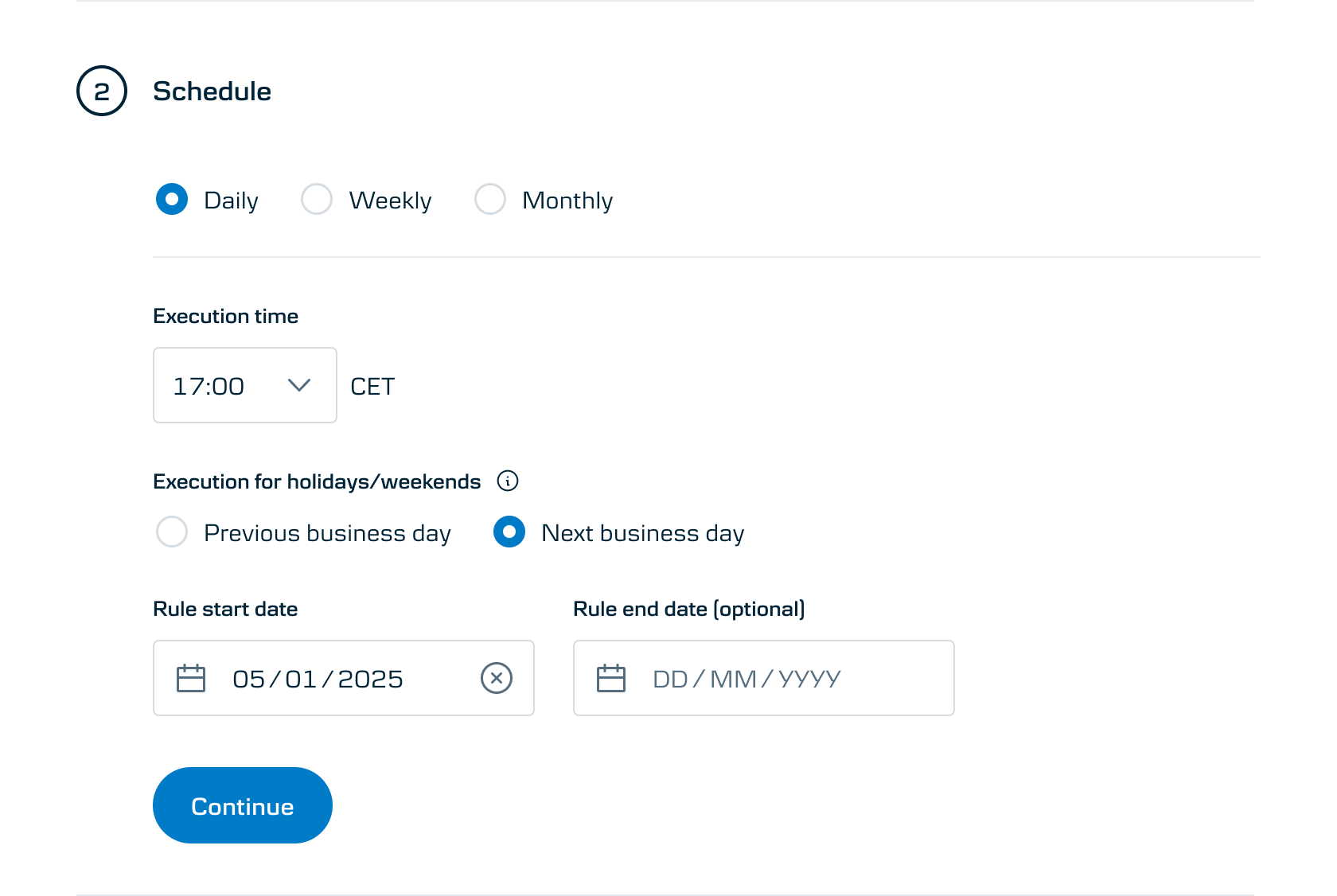
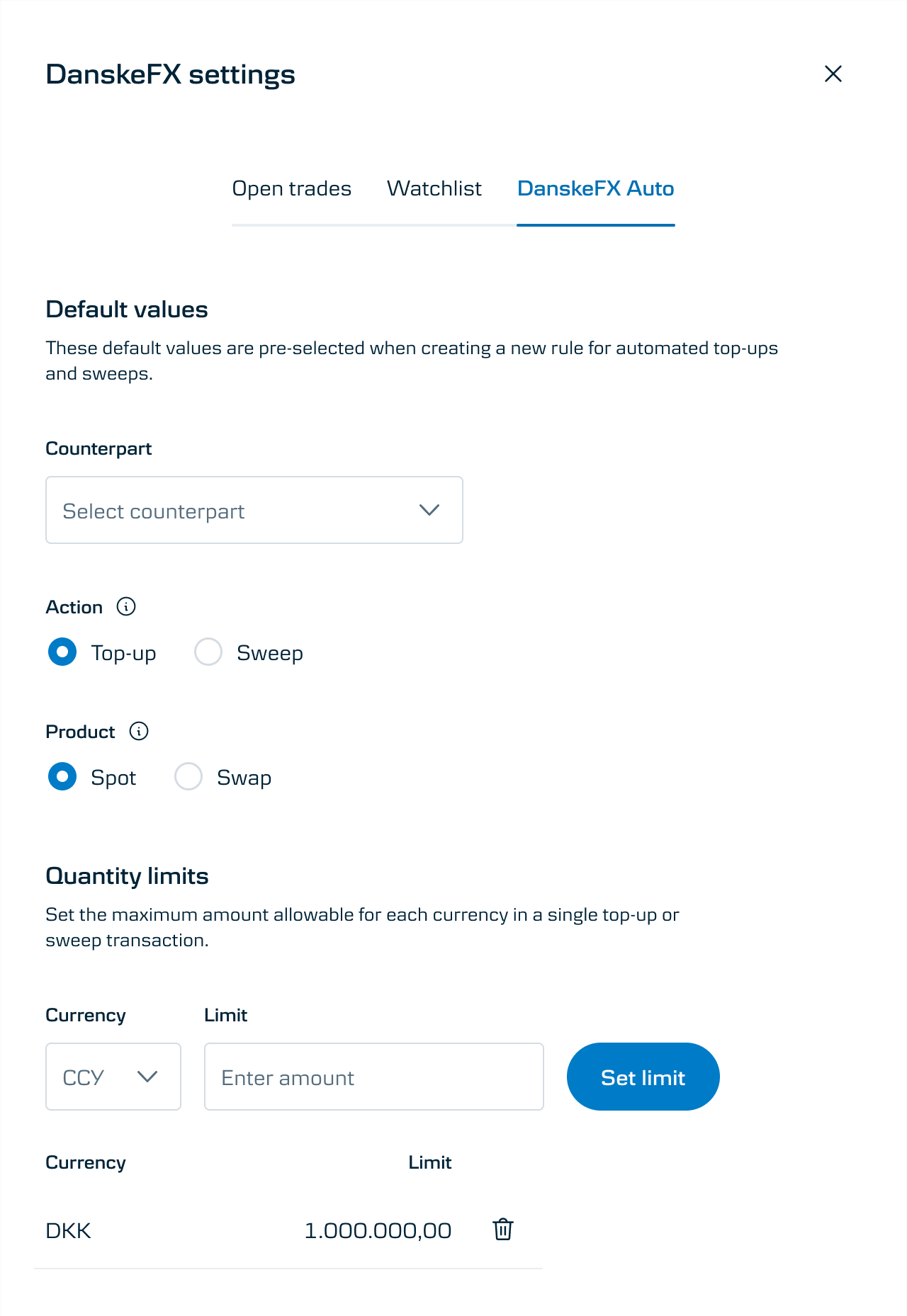
The solution is a rule-based automation tool that lets customers set up configurable rules for top-ups, sweeps, and swaps. A clear step-by-step structure guides users through defining the automation logic, scheduling, and global settings — with progressive disclosure to keep the interface approachable.